
Search for "been and already"
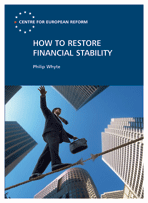
How to restore financial stability
Report
12 January 2010
In 2008, the global financial system came close to collapse. Ever since, policy-makers have been busy overhauling the way it is regulated and supervised. Will this flurry of activity produce a more stable financial system – and if it does, at what cost?
All is not well in the Visegrad economies
Bulletin article
29 November 2017
On the face of it the Visegrad – the Czech Republic, Hungary, Poland and Slovakia – appear to be doing quite well economically. But there are problems behind the headline growth figures.
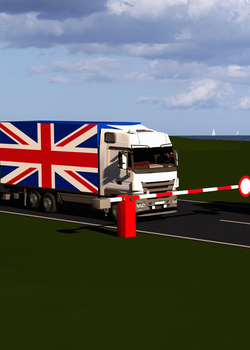
Now is the worst time for 'global Britain'
Insight
27 June 2019
Global trade integration has stalled since the financial crisis, and is unlikely to pick up steam any time soon. In that context, plans for ‘global Britain’ will do little to offset the costs of Brexit.
Could Germany end up with a minority government?
Insight
04 September 2017
The SPD has probably bottomed out and a centre-right coalition might not have the numbers. But neither the SPD nor the Greens are keen on the junior role under Merkel.
Self-serving myths of Europe's neo-Calvinists
Article
21 November 2011
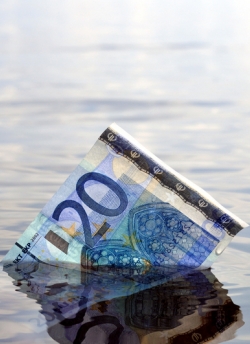
If you have half an hour, read this paper (pdf) by Philip Whyte and Simon Tilford for the Centre for European Reform. It is a forensic look into the deeper causes of Europe's crisis and why the reactionary policies being imposed on two thirds of the eurozone by Germany's Wolfgang Schauble and the northern neo-Calvinists – with input from 1930s liquidationists at the ECB – will lead to certain disaster.
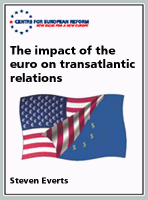
The impact of the euro on transatlantic relations
Report
07 January 2000
European Union is, almost by definition, subject to strain and tension. During the Cold War some stability was maintained by the common external threat that bound the NATO allies together under US leadership.
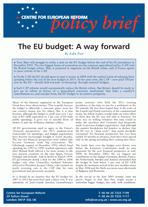
The EU budget: A way forward
Policy brief
01 September 2005
Many of the bitterest arguments in the European Union have been about money. That is partly because the budget is inherently a zero-sum game: more for one country means less for others.
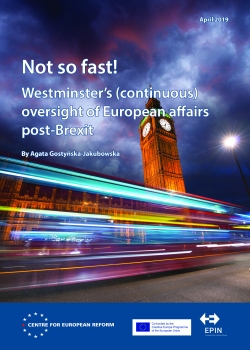
Not so fast! Westminster's (continuous) oversight of European affairs post-Brexit
Policy brief
12 April 2019
The UK will not be able to make a clean break from the EU and its laws post-Brexit. Westminster should develop new scrutiny structures which would enable parliamentarians to better navigate yet unknown post-Brexit reality.

After Trump tweets, how is immigration really affecting Europe?
Press quote
21 June 2018
"It's been one of the biggest crises that the European Union has faced in a decade where there have been several crises in a row," John Springford, deputy Director of the Centre for European Reform, tells CBS News. The European Union is a borderless travel zone, meaning that once someone enters, he or she is able to move between EU countries freely. This "freedom of movement" allows citizens of EU member states to live and work in any EU country they please, but it also means once migrants cross over the bloc's external border, they are relatively free to move anywhere within the Eurozone.

Cameron presses EU for 'Better deal for Britain'
Press quote
28 May 2015
The British desire to limit migration has already led "many on the Continent to view Britain as a nasty country," said Charles Grant, director of the CER. "The worse Britain's reputation, the less likely are other governments," with their own domestic politics, "to give Cameron what he wants," he said.