
Search for "been and already"
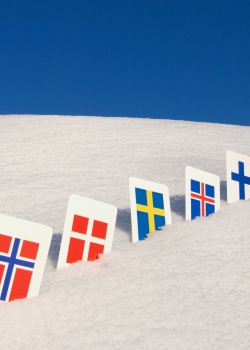
We are all Nordic now, or are we?
Bulletin article
02 April 2007
The EU drew up its Lisbon reform agenda in 2000 with the thinly disguised goal of catching up with the US. But the idea that Europe should strive to adopt ‘Anglo-Saxon’ capitalism is abhorrent to those who cherish Europe’s more extensive welfare states.
Why the EU's recovery fund should be permanent: Country report- Greece
Policy brief
11 November 2021
[NAVIGATION]
COVID-19 While Greece managed to avoid a large first wave of Covid-19 infections by locking down early in spring 2020, it suffered from two further waves – and two further lockdowns – in November-December 2020 and in April-May 2021. Most activities re-opened in mid-May 2021.
In 2020, government support to the economy...

A 'competence catalogue' is code for protectionism
Bulletin article
03 June 2002
The European Convention is now in full swing, working on reform options to ensure the EU works better after enlargement. Among the many issues the Convention intends to explore is the question of how better to define the division of 'competences' the right to exercise power between the various levels of government across the EU.

The first coherent Brexit plan that Britain has produced... the EU will never agree to it
Article
06 July 2018
On Thursday The Times obtained a draft of Theresa May’s plan for Brexit. Sam Lowe, of the Centre for European Reform, analyses the prime minister’s preferred way forward.

No loosening competition rules
Press quote
20 October 2025
The European Commission shouldn’t give in to temptation and calls to loosen competition policy to boost competitiveness, Zach Meyers, associate fellow at the Centre for European Reform, told Aude. “Competition policy has generally been kind of a force for good and a force for innovation in Europe,” he said.Still, there are areas where improvements are needed, certainly when looking at it from a single market perspective, he said. Meyers co-authored a policy paper last week laying down a reform agenda for the internal market, which includes some ideas on the competition side. While Europe likes to boast that there are more competitors on the markets than in the US, these competitors operate in smaller national markets. The more concentrated US markets are more dynamic, with companies that are either growing or shrinking. Meanwhile, Europe lacks this dynamism with “kind of pretty stagnant [companies] in terms of size,” Meyers said.
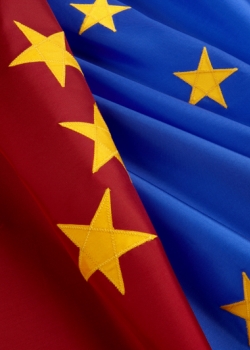
How should Europe respond to China's strident rise?
Bulletin article
01 February 2010
Until very recently, many western politicians, bankers and business people were broadly optimistic about the rise of China. They assumed that as China became more developed it would become more western.

Nicola Sturgeon Brexit adviser pours cold water on her single market plans hours before they are unveiled
Article
19 December 2016
Charles Grant said it was “extremely difficult” to see how her plans were legally, politically or technically feasible.
Why the EU's recovery fund should be permanent: Country report- Spain
Policy brief
08 November 2021
[NAVIGATION]
The impact of the COVID-19 pandemic on Spain As of July 2021, Spain had suffered over 81,000 confirmed deaths, with its worst wave in January 2021.1 Lockdowns were put in place in March-June 2020 and in October 2020-May 2021. This took a toll on economic activity, as GDP dropped by...
The impact of the COVID-19 pandemic on Spain As of July 2021, Spain had suffered over 81,000 confirmed deaths, with its worst wave in January 2021.1 Lockdowns were put in place in March-June 2020 and in October 2020-May 2021. This took a toll on economic activity, as GDP dropped by...

Europe’s new division of labour
Bulletin article
01 June 2006
Two years after the accession of ten new members, the EU is showing clear signs of enlargement fatigue. While most politicians and economists insist that eastward enlargement has been good for the EU, voters are increasingly sceptical.
The Helsinki Final Act at 50: Relevant, or a relic?
Insight
28 July 2025
The Helsinki Final Act played a key role in ending the Cold War, but the Organisation for Security and Co-operation in Europe (OSCE), to which it gave birth, has progressively been sidelined in Europe’s security architecture.