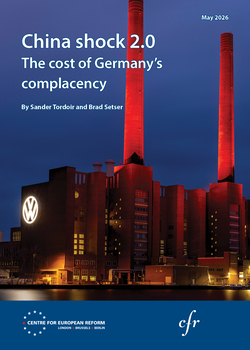
Germany is ground zero of the second China shock, but Berlin is not fighting back, even as the shock erodes the country’s engineering sectors that are vital to its economic security.
Both elections tested democratic resilience and, while confirming the status quo on most EU policies, showed that anti-establishment sentiment is here to stay.
If the Strait of Hormuz stays closed, Europe will face as serious an energy crisis as it did in 2022. This time, energy poverty policies must be more targeted, and electrification more ambitious.
Ceuta was not a migration crisis, but a crisis of trust. Europe's leaders should stop weaponising Schengen against each other, lest the EU’s adversaries copy them.
China’s trade and industrial policy, its monopoly on many critical technologies and its geopolitical ambitions make it a genuinely systemic rival to the EU and the UK. They need to work together to defend their interests.
The Helsinki Final Act played a key role in ending the Cold War, but the Organisation for Security and Co-operation in Europe (OSCE), to which it gave birth, has progressively been sidelined in Europe’s security architecture.